D'Maschinn automatiséiert d'Schneiden, net d'Uerteel ronderëm. Dëse Guide behandelt d'Uerteel: d'Auswiel a Virbereedung vu Material, deem d'Maschinn vertraue kann, d'Ënnerstëtzung opstellen, sou datt d'Aarbechtsfläche roueg leeft, d'Programméierung vun engem gezeechente Kontur, d'Liesung vum éischte Schnëtt an d'Diagnos vun de puer Symptomer, déi bal all defekt Deeler, déi eng Holzdréibank produzéiert, erklären.
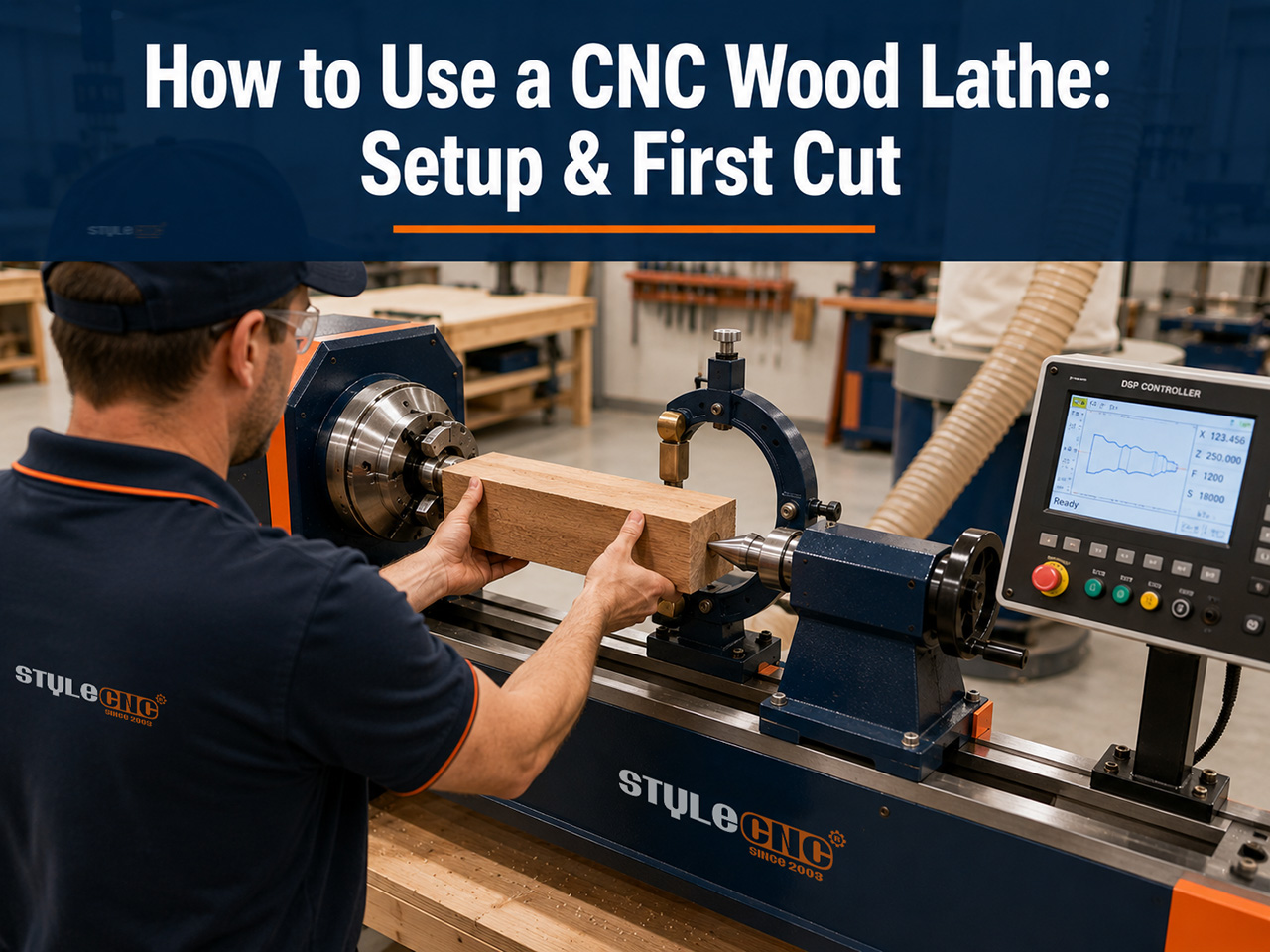
Virun der Maschinn: Auswiel a Virbereedung vum Ronnblat
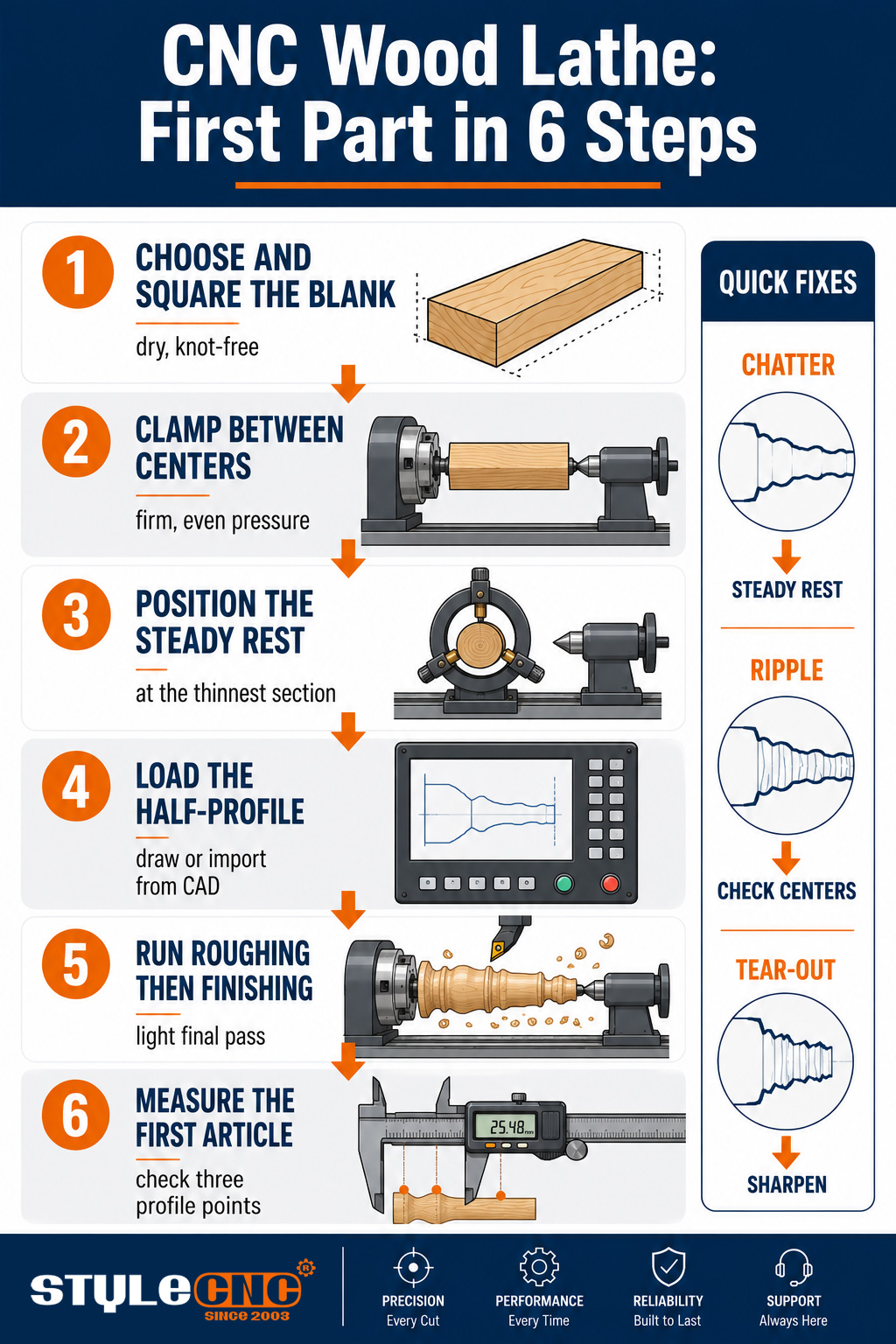
All fäerdeg Profil ierft de Réier, vu wou en ugefaangen huet, dofir ass d'Virbereedung déi héchst zéng Minutten am ganze Prozess. Wielt Holz mat enger riichter Faserung ouni locker Kniet laanscht d'Dréilängt, well e Kniet op engem schlanke Stéck mat héijer Geschwindegkeet erausgehäit ka ginn. Dréchent, stabilt Holz hält seng Dimensiounen no dem Schnëtt; de Material, deen nach ëmmer bei Fiichtegkeet beweegt, gëtt haut ronn an nächste Woch oval.
Schneit d'Rieder rechteckeg a konsequent, e bësse méi laang wéi dat fäerdegt Stéck fir d'Spannstäbchen un all Enn. Markéiert a virbuert d'Mëttpunkten, wann Äre Spannfutterstil dovun profitéiert, well e Rieder, deen net an der Mëtt gelueden ass, de Rau-Duerchgang forcéiert, Material ongläichméisseg ze entfernen an d'Maschinn vun der éischter Sekonn un géint Vibratiounen ze kämpfen huet. Déi Hartholz, déi dominéieren Produktiounsholzbearbechtungsapplikatiounen, Buch, Ahorn, Birk an Eechen, all belounen dës Disziplin mat propperen Schnëtt.
Opstellung: Klemmen, Zentren an déi stänneg Rou
Belaascht d'Objet tëscht dem Undriffsfutterfutter um Kappstock an dem liewegen Zentrum um Heckstock a setzt béid mat festem, gläichméissegem Drock an d'Spannung. Ze locker an d'Objet rutscht ënner der Virbearbeitungsbelaaschtung; ze gespannt a laang Béi vum Holzstock, déi de Profilduerchlaf trei als eng Kurve reproduzéiert, déi Dir net gezeechent hutt.
Déi stänneg Rou ass den Ënnerscheed tëscht enger Maschinn, déi schlank Aarbecht dréinen kann, an enger, déi se nëmmen an der Broschür oplëscht. Positionéiert d'Reschtfanger op der dënnster programméierter Sektioun, ier de Zyklus ufänkt, well e Baluster oder e Schläger, deen ënner e puer Zentimeter moosst, sech ouni Ënnerstëtzung vun der Klingen ewechbéie wäert, an d'Resultat ass e Klapperen, deen keng Parameterännerung heele kann. D'Betreiber stellen déiselwecht Fro an enger Dose Formuléierungen: firwat ass d'Mëtt vu menger Spindel rau, wann béid Enden propper sinn? D'Äntwert ass Oflenkung, an de Rou ass d'Léisung.
Maacht d'Schutzschützer virun all Spin-up zou a bleift bei der éischter Ëmdréiung vun engem frësche Blech ewech vun der Rotatiounsfläch, well dat ass de Moment wou en onsichtbare Réck oder e lockere Knuet lassgeet. D'Gewunnecht kascht 2 Sekonnen; d'Alternativ léiert d'Lektioun bei Spindelgeschwindegkeet. D'Stëbsofzuch, déi vum 1. Schnëtt un leeft, ass Deel vun der selwechter Disziplin, andeems Spän vun de Schinne ewechgehale gëtt an de feine Stëbs aus der Loft erausgehale gëtt, déi de Bedreiwer während der ganzer Schicht otmet.
Programméierung vum Profil
De Programm fänkt als Hallefprofil un: eng 2D-Kontur vun enger Säit vum fäerdegen Deel vun Enn bis Enn. Zeechent se an der Software vum Controller oder importéiert se aus dem CAD, setzt den Duerchmiesser an d'Längt vum Ronndeel, an d'Software generéiert d'Rau- an d'Ferbeaarbechtungsprozedur selwer. Et gëtt keng Schabloun fir ze schneiden a kee G-Code fir manuell op enger moderner Maschinn ze schreiwen.
2 Programmastellungen verdéngen Opmierksamkeet bei all neien Deel. Stellt d'Rauhdéift sou an, datt de quadratesche Réierstoff a komfortablen Bëss amplaz vun engem heldenhafte Laf ronn gëtt, an stellt d'Fäerdegstellung méi lues an, wéi et fir den éischten Artikel néideg ass. De komplette Workflow vun Zeechnung zu Deel, mat Software-Screenshots a bearbechte Beispiller, gëtt Schrëtt fir Schrëtt am ... behandelt. Wéi een eng Holzdréibank benotzt: Grondlageguide, wat gutt mat dëser Säit fir d'Betreiber an der éischter Woch passt.
Den 1. Schnëtt: Parameteren an d'Resultat liesen
Fänkt konservativ un a loosst de Schnëtt Iech soen, wou de Marge ass:
• Spindel Geschwindegkeet: fänkt bei niddregen Dausende vu RPM fir üblech Beenduerchmiesser un, méi niddreg fir grouss Duerchmiesser, an erhéicht nëmmen, soulaang de Schnëtt glat bleift.
• Rauchenmëttelméisseg Fütterung, flaach Bëss; d'Zil ass e ronne Stock, keng fäerdeg Uewerfläch.
• AusgruewungEe liichte kontinuéierleche Laf mat reduzéierter Zufuhr produzéiert d'Uewerfläch; 2 zéckend Laf produzéieren Zeielinnen.
• Lauschtert a kucktE proppere Schnëtt kléngt gläichméisseg a werft Bänner eraus; Hammergeräischer a Stëbs bedeiten, datt d'Kante oder d'Fuerderung falsch ass.
Féiert den 1. Artikel aus, stoppt a moosst en un der Zeechnung op 3 Punkten laanscht de Profil ier Dir de Charge ofgitt. D'Maschinn widderhëlt gären e Feeler véierzeg Mol mat perfekter Konsistenz, sou datt den 1. Deel de ganze Wäert vun der Inspektioun huet. Fäerdeg Beispiller iwwer Been, Balusteren a Lächer an der ... CNC Holzdréibank Projetgalerie weisen, wéi en ageprägten éischten Artikel Uewerflächlech ausgesi soll, ier e geschleeft gëtt.
Troubleshooting: Symptom bis Ursaach fir ze behiewen
Bal all schlecht Deel vun enger Holzdréibank léisst Spuere vun engem vun 5 Symptomer hanner sech:
| Symptom | Wahrscheinlech Ursaach | gefléckt | Moosse |
|---|---|---|---|
| Klapperspuren op dënnen Deeler | Onënnerstëtzte Schaft, deen sech vun der Klingen ewechbéit | D'Stabilitéit an der schlanker Zon derbäisetzen oder nei positionéieren; d'Schnëttdéift reduzéieren | Oflenkung sichtbar um Roupunkt wärend dem Duerchlaf |
| Wellen laanscht de ganze Profil | Ofgenotzt Zentren, locker Gips oder Klingen iwwer senger Kant | Zentren nei setzen, d'Gibs festhalen, d'Klingen dréien oder ersetzen | Ripple Pitch widderhëlt sech mat Spindelrotatioun |
| Ausräissen op der geformter Faserung | Fudder ze aggressiv fir d'Holz, stumpf Kant | Verlangsamt d'Finish-Fuerung, maacht e méi liichte Schlussduerchgang, schärft | D'Uewerfläch liest sech no der Duerchféierung glat ënner engem Fangerspëtz |
| Brandspuren an de Profiltäler | Klingenverbleiwen, Geschwindegkeet ze héich fir den Duerchmiesser | Erhéicht d'Fuerderung duerch d'Dall, senkt d'Spindelgeschwindegkeet | Brennen erschéngt op de selwechte Profilpunkten an all Deel |
| Deeler variéieren am Laf vun der Partie | Réng net konsequent, Spanndrock driftend | Standardiséiert d'Virbereedung vum Ronnmaterial, kontrolléiert d'Kraaft vum Spannfutter a vum Heckstock | Duerchmiesser verdeelt iwwer zéng hannereneen Deeler |
Schafft d'Tabell vun uewen no ënnen, wann e Symptom optrieden, an ännert eng Variabel gläichzäiteg, sou datt d'Léisung sech selwer identifizéiert. Déifgräifend Diagnosebeem, dorënner elektresch a Controllerfehler, déi iwwer d'Schneidproblemer erausgoen, liewen an der Holzdréibank Troubleshooting Guide, dat ass d'Säit déi nieft der Maschinn als Lieszeechen gespäichert soll ginn.
De Maintenance Rhythmus, deen et schneiden léisst
• All SchichtSpänen vun de Schinnen a Schrauwen ewechhuelen, a Messerkanten virum 1. Zyklus kontrolléieren.
• WochenzäitschrëftD'Féierungsbunnen an d'Kugelschrauben no dem Zäitplang am Handbuch schmieren an d'Ausriichtung vum Heckstock iwwerpréiwen.
• Mount: Riemenspannung kontrolléieren, d'Gib-Astellung kontrolléieren a bestätegen, datt d'Mëtt vum Riemen riicht leeft.
• Wéi gedroeProfilblieder dréien oder schärfen beim éischten Zeeche vun engem Ausrëss, anstatt nodeems se de Material ruinéiert hunn.
Checklëscht virum Fluch virun all Batch
✓ Blankmaterial riicht, dréchen, ouni Kniet a geschnidden op eng konsequent Längt.
✓ Spannfutter a Schwanzstock fest a gläichméisseg gesat, stabil Plaz um dënnsten Deel positionéiert.
✓ Profil gelueden, Ronnmaße festgeluecht, Rauhdéift an Finishzufuhr iwwerpréift.
✓ Messer iwwerpréift, Schutzschirmer zou, Ofzuch leeft.
✓ 1. Artikel op 3 Profilpunkten gemooss ier de Charge leeft.
Oft gestallten Froen
Mat wéi enger Spindelgeschwindegkeet soll ech ufänken?
Fänkt niddreg un fir den Duerchmiesser, an den niddregen Dausende vu RPM fir typescht Beenmaterial a méi lues fir grouss Duerchmiesser, da erhéicht et wärend de Schnëtt glat a roueg bleift. Déi richteg Geschwindegkeet annoncéiert sech; déi falsch klapert oder verbrennt als éischt.
Firwat klappert mäi Stéck nëmmen am dënnen Mëtteldeel?
De schlanke Kolwen béit sech vun der Klingen ewech, genau do wou en am dënnsten ass, an de Bounce dréckt sech als Klapperen of. Positionéiert d'Steifstëtz op där Sektioun a maacht de Schlussschnëtt méi liicht; keng Geschwindegkeets- oder Zufuhrännerung kann d'Ënnerstëtzung ersetzen.
Muss ech Réng virum Belueden ofronden, oder kann d'Maschinn quadratesch Material huelen?
Produktiounsmaschinne huelen direkt quadratesch Material; d'Raubeaarbechtung bréngt et a Sekonne ronn. Wat wichteg ass, ass datt de quadratesche Ronnstoff riicht an zentréiert ass, well e Ronnstoff deen net an der Mëtt steet, d'Klingen bei all Rotatioun dréckt, bis et ronn gëtt.
Wéi kann ech verhënneren, datt en op geformtem oder gekrauseltem Holz opräisst?
Als éischt schärfen, dann d'Finish-Fuerderung verlangsamen an e méi liichte Schlussduerchgang maachen. Gefërmegt Kierper ännert d'Richtung stänneg, an nëmmen eng schaarf Kant bei enger sanfter Fuerderung schneit se propper; e puer héich gefërmegt Materialien brauchen einfach eng programméiert Schleifzulag.
Wéi dacks mussen d'Profilmessen geschärft oder ersat ginn?
No Zoustand, net Kalenner: déi éischt ofgerappt oder onschaarf Uewerfläch um Lager, déi virdru propper geschnidden ass, ass de Signal. Atelieren, déi all Dag dicht Holz benotzen, beréieren d'Kante no engem wöchentleche Rhythmus a behalen e geschäerft Ersatzset fir ze tauschen ouni d'Produktioun ze stoppen.
Meng fäerdeg Profiler weisen eng fein Spiralwelle. Wat verursaacht dat?
E reegelméissegt Spiralmuster verfollegt d'Rotatioun a weist op d'Mechanik hin: ofgenotzt oder locker Mëttelstécker, Spill vun der Klingen oder eng Klingen, déi iwwer hir Kant eraus ass. Setzt d'Mëttelstécker nees an d'Rei, dréckt d'Klingen fest a wiesselt d'Klingen, ier Dir de Programm beréiert.
Kann ech gréng oder deelweis gedréchent Holz maachen?
D'Maschinn schneit et, awer den Deel behält net déi Form, déi Dir geschnidden hutt. Gréngt Material beweegt sech beim Dréchnen, dofir wëll d'Produktiounsdréiaarbecht dréchen, stabil Réier; Gréngt Dréiaarbecht gehéiert zu Bastelschësselen mat bewosster Dréchnungszoulag, net zu Batch-Spindelaarbecht.
Wéi eng reegelméisseg Ënnerhaltsaarbecht ass eigentlech am wichtegsten?
Splittert all Kéier vun de Schinnen a Schrauwen of, d'Schmierung ass zäitlech, an d'Klingen sinn an engem éierlechen Zoustand. Déi 3 Gewunnechten verhënneren d'Verschleisskette, déi a Wellen, Klapperen a verluerener Genauegkeet féiert; alles anescht am Handbuch ass wichteg, awer déi 3 bezuele sech all Dag aus.
Féiert dës Schrëtt op der richteger Maschinn aus
All Techniken uewendriwwer setzen eng Maschinn mat solider Ënnerstëtzung, richtege Mëttelpunkten an engem Controller vir, deen Profiler ausdréckt. Vergläicht Konfiguratiounen iwwer de ganze Spektrum vun ... CNC Holzdréibanken fir Dréien a Schnëtzen a kritt e gratis Devis mat abegraffer Ausbildung.